When water suddenly gets into your home, the first few hours can feel overwhelming. You may be dealing with a burst pipe, appliance leak, flooded basement, or water coming in from outside, and you may not know what happens after you call a mitigation company.
The water mitigation process is designed to limit additional damage, remove excess water, dry affected materials, and monitor the home until acceptable drying goals are reached. Restoration or reconstruction may come later, depending on what was damaged.
Knowing what to expect can make the process easier to understand and help you see why fast action matters.
What Happens When You First Call a Water Mitigation Company?
The first step is usually gathering information about what happened and how much of the home may be affected. The mitigation company may ask where the water came from, when the problem started, which rooms are involved, and whether the source of the water has been stopped.
In some situations, another professional may need to correct the source before or during mitigation. For example, a plumber may need to repair a failed pipe while the mitigation team handles water removal, drying, and documentation.
AllKlean provides water damage restoration and emergency mitigation services throughout the Spokane and Coeur d’Alene areas, including 24/7 response for urgent water-loss situations.
Step 1: The Initial Water Damage Assessment
Once the mitigation team arrives, the first priority is understanding how far the water has spread. What you can see on the surface may only be part of the problem.
Finding the Extent of the Water
Technicians may inspect walls, flooring, cabinets, baseboards, and other affected materials while using moisture-detection equipment to identify areas that are still wet.
This may involve:
- Checking visible areas of standing water
- Testing walls, floors, and other building materials for moisture
- Mapping which rooms and materials are affected
- Determining whether materials may be dried in place
- Identifying areas that may need to be opened or removed for proper drying
Moisture can travel into areas that look dry from the outside, which is why professional assessment involves more than simply looking for puddles.
Identifying the Water Source
The team will also consider how the water entered the home. Common causes include burst or frozen pipes, leaking appliances, overflowing fixtures, roof or window leaks, basement flooding, and storm-related water intrusion.
Knowing the source helps determine how the affected areas should be handled and whether another repair needs to happen before mitigation can continue.
Step 2: Standing Water Is Extracted
If standing water is present, removing it is one of the first major steps in the mitigation process.
Professional extraction equipment may be used to remove as much excess water as practical before structural drying begins. Getting the bulk of the water out first can help reduce additional saturation and allows the drying equipment to focus on moisture that remains inside building materials and the surrounding air.
The exact equipment used depends on the amount of water, the affected surfaces, and the conditions inside the home.
Step 3: Damaged Materials Are Evaluated
Water mitigation does not automatically mean that everything wet has to be torn out. Part of the process is determining what may be dried and what may need to be removed.
The team may evaluate materials such as:
- Drywall
- Insulation
- Carpet and padding
- Wood or other flooring
- Baseboards and trim
- Cabinetry
- Other porous building materials
Whether something can remain in place depends on factors such as how wet it became, how long it was exposed, the type of material, the source of the water, and whether drying equipment can effectively reach the affected area.
In some cases, limited removal is necessary to expose hidden moisture and allow the structure to dry properly. The goal is not unnecessary demolition. It is to create the conditions needed to stop further damage and dry the affected areas effectively.
Step 4: Drying and Dehumidification Begin
After standing water has been removed and affected materials have been evaluated, the structural drying phase begins.
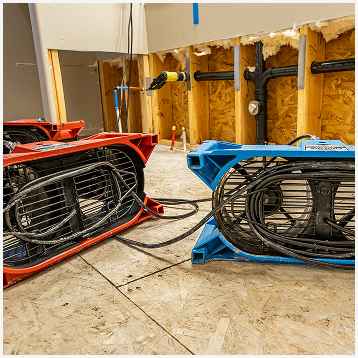
Homeowners should expect to see professional drying equipment placed throughout the affected area. This may include air movers that circulate air across wet surfaces and dehumidifiers that help remove moisture from the indoor environment.
The equipment may need to operate continuously for an extended period while the structure dries.
Why Does the Drying Equipment Need to Keep Running?
Water extraction removes the water that can be physically collected from the surface. It does not necessarily remove moisture trapped inside drywall, flooring, wood, framing, or other materials.
Drying equipment helps move that remaining moisture out of building materials so it can be removed from the air. Turning off or moving equipment without guidance can interrupt the drying plan and potentially extend the process.
Although the equipment can be noisy and may make certain rooms less convenient to use temporarily, consistent operation is often an important part of getting the structure dry.
Step 5: The Mitigation Team Monitors Drying Progress
One of the most important parts of water mitigation happens after the equipment has been placed.
The team may return during the drying process to take new moisture readings and evaluate how conditions are changing. These visits help determine whether the drying plan is working as expected and whether equipment needs to be adjusted.
During monitoring visits, technicians may:
- Measure moisture levels in affected materials
- Compare current readings with earlier measurements
- Check the performance and placement of drying equipment
- Reposition or adjust equipment when appropriate
- Determine whether certain areas have reached acceptable drying goals
This is why water mitigation is not usually a one-visit service. A surface may feel dry to the touch while moisture is still present deeper in the material.
How Long Does Water Mitigation Take?
There is no single drying timeline that applies to every home.
The length of the mitigation process depends on factors such as:
- How much water entered the home
- How far the water spread
- Which materials were affected
- How long the materials were wet before mitigation began
- Whether any materials had to be removed
- Indoor temperature and humidity conditions
- How easily the affected areas can be accessed
- Whether the original source of the water has been corrected
Some losses may dry relatively quickly, while more extensive water damage can require a longer mitigation period. The important point is that equipment should be removed based on drying progress and moisture readings rather than an arbitrary number of days.
What Happens After the Home Is Dry?
Once the affected materials have reached the appropriate drying goals, the mitigation phase can come to an end.
At that point, drying equipment can be removed and any remaining repairs can be addressed. If drywall, flooring, trim, insulation, or other materials had to be removed, restoration or reconstruction may be needed to return the affected areas to their pre-loss condition.
This is an important distinction: water mitigation focuses on limiting further damage and getting the structure dry, while restoration focuses on repairing or rebuilding what was damaged.
What About the Insurance Claim?
Water damage often involves an insurance claim, but coverage depends on the cause of the loss and the specific terms of your policy.
When it is safe to do so, homeowners may want to document visible damage with photos and notify their insurance company as appropriate. A professional mitigation company may also document affected areas, moisture readings, equipment placement, and work performed during the drying process.
For a more detailed look at the claims process, see AllKlean’s guide to water damage insurance claims.
Why Fast Water Mitigation Matters
Water does not necessarily remain where it first appears. It can spread into flooring, walls, cabinets, insulation, and other porous materials over time.
Prompt mitigation can help:
- Limit how far water spreads
- Reduce additional saturation of building materials
- Begin the drying process sooner
- Give more materials an opportunity to be evaluated for drying
- Reduce the potential for additional moisture-related damage
- Move the home toward restoration more quickly
Fast response cannot guarantee that every material will be saved, but allowing water to remain in the structure can increase the scope of the problem.
Why Work With a Local Water Mitigation Company?
Water mitigation often requires more than an initial emergency visit. Technicians may need to return to monitor moisture levels, adjust equipment, document progress, and coordinate the next stage of the recovery process.
Working with a local mitigation company can make that ongoing process easier. AllKlean has served homeowners in the Spokane and Coeur d’Alene region for more than 20 years and provides 24/7 emergency water-damage response.
A local team can respond quickly, remain available throughout the drying process, and provide ongoing communication as conditions in the home change.
Know What to Expect When Water Damage Happens
The water mitigation process typically moves through several stages: emergency response, assessment, water extraction, material evaluation, drying and dehumidification, moisture monitoring, and finally the transition into restoration if repairs are needed.
You do not need to understand every piece of drying equipment before asking for help. What matters most is responding quickly and making sure affected areas are properly evaluated, dried, and monitored.
If water is spreading through your home, AllKlean provides professional water mitigation and water damage restoration services throughout Spokane, Coeur d’Alene, and surrounding communities.
Contact AllKlean for 24/7 help with water damage and emergency mitigation.